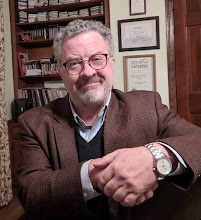
So do you think that one day in 476 AD (CE for my progressive but misguided friends) the Goths rolled into Rome, sacked the place, had everyone hang up their togas and started speaking German within a week or so? Not so much.
Wednesday, May 3, 2023
Arrivederci Roma
So do you think that one day in 476 AD (CE for my progressive but misguided friends) the Goths rolled into Rome, sacked the place, had everyone hang up their togas and started speaking German within a week or so? Not so much.
Sunday, February 5, 2023
A Museum Without A Gift Shop
Of all of the kings who reigned in Mesopotamia the name which probably comes to mind most readily is Nebuchadnezzer II (reign 605 – 562 BC) of Chaldean Babylon.
Oh sure there is a lot of be said for Sargon of Akkad (reign 2334-2279 BC ) and legal minds will lean toward Hammurabi (reign 1792-1750 BC) of Amorite Babylon, but the widest recognition comes in no small part due to the good work of generations of Sunday School teachers and Nebuchadnezzer's conquest of Judah, Daniel in the lion’s den, the fiery furnace temporarily occupied by Shadrach, Meshach, and Abednego, and then of course eating grass for a few years.
What you might not know is that Nebuchadnezzer built probably the first history museum. Babylon was just re-emerging after years of Assyrian domination and needed an extreme makeover. The new king got right to work – new temple to Marduk the hometown deity, really nice hanging gardens, and a museum among other things.
The museum was dedicated to the history of previous cultures in Mesopotamia of which many had come and gone since the Sumerians basically invented writing around 3,500 BC. It had statuary, cuneiform tablets, pottery, but oddly no gift shop as far as we know.
This is probably a good time to take a quick look at your sundial or calendar. Where are we on the timeline of familiar world history? Fall of Troy about 1,200ish BC, Romulus founds Rome around 715 BC but the city does not rid itself of Etruscan kings until around 509, the Peloponnesian War runs 431-404 BC, the Zhou Dynasty is running things in China during the reign of Nebuchadnezzer, the Olmecs are winding down in Mesoamerica, and the Buddha aka Siddartha Gautama in born in 563 in Nepal. Got it? Okay.
What happened before 3,500 BC? A lot but we don’t know as much because pre-history is generally defined as the time before written language. There were surely permanent settlements, agricultural and trade economic systems, spoken languages, etc but the documentation of this come more from archeologists than anthropologists.
NOTA BENE: Just because people lived in cultures without written language doesn’t mean they weren’t intelligent. Are you smarter than a 5th grader? I hope so. Are you smarter than someone who lived in 1927, 1834, 1061, 235, or 321 BC? You undoubtedly have a great deal more knowledge of all sorts of things, but are you wiser, more complex emotionally, better at using available resources, a better problem solver, or more content? Not necessarily.
But back to the museum. If we talk about history from 3,500 BC (or BCE, we can discuss that another time) to the midpoint of Nebuchadnezzer’s reign, say 584, that is 2,916 years. The range from 584 to 2023 is only 1,439 years. True, with steam powering the industrial revolution, the transatlantic cable connecting Europe and American via telegraph and then telephone, the electric light bulb, radio & television, air flight then space slight, and the internet, the rate of change of the past 250 years alone is staggering. Even so we are all products of our time.
Our time, perhaps a bit more than three score and ten now with modern medicine, is still a blip in a 5,523 timeline (add several more thousand for pre-history living if you really want to feel itty bitty tiny in the grand scheme).
So bravo Nebuchadnezzer and all the subsequent history and natural history museum curators and supporters down through the ages. It is important to be present and live in the moment, but there is so very much to be learned from the past.
Tuesday, December 20, 2022
How I Learned to Appreciate Elvis Week...in Iowa
I grew up in Olive Branch (family farm and church) and Whitehaven (Harding Academy at Hwy 51 & Holmes then SBEC on Tulane). Every so often on the AM radio a new Elvis song would come out and that was kind of cool. I was doing Algebra I homework (7th grade , a momentary prodigy for math but that soon passed) at home one afternoon when the news came that Elvis had passed away. It was sad of course but not a surprise. Trips to Methodist South and health peril had been broadcast before.
The mourning of fans worldwide was no surprise either. Some people reading this will still have a copy of the Commercial Appeal or Press Scimitar with giant headlines or perhaps tickets to the concert that wasn't to be. The renaming of Highway 51 as Elvis Presley Blvd was kind of an eye opener - this sort of thing wasn't done much in those days. The plot to steal the body from the cemetery was and is just bizarre. By moving the gravesite to Graceland the seed of an idea for a tourist attraction was born and oh how it has grown. The amazing growth and decades long staying power of Elvis Week with all the panels, activities, and candlelight vigil is something of a headscratcher for locals. At one time Bab Bob's/Vapors hosted an Elvis impersonator contest (naturally a fine young Baptist never actually visited such a place but you heard about that); this has been replaced by tribute artists from around the world who compete in preliminaries and prestigious finals...and has spawned feeder contests on multiple continents (much like the International Blues Challenge). Later, in my 40s, I had the opportunity to emcee a preliminary a preliminary night at the Hard Rock on Beale and really enjoyed it. Generally, locals appreciate the tourists, the tourist dollars, and the mainly positive press for the city. Graceland , now with the Graceland Guest House and more, is superbly managed. Fans of all ages -- from 80somethings to teens -- continue to come.
Thursday, February 24, 2022
There was no Renaissance in Russia
There was no Renaissance or Reformation per se in Russia. At the ascension of Peter the Great (1682-1725), the main garments were medieval robes, women of the royal family were kept locked in towers, literacy was barely existent and contact with other countries shunned. Russian forces of that era were mauled by Ottomans and Swedes. There was no northern seaport. Serfdom, flogging, death by impalement or any number of similarly gruesome methods was common. Russia lost the Crimean War in 1856 to England, France, and the Ottomans. Fast forward to 1904 and Russia is trounced by Japan. The revolution in 1917 takes place partly because of the incompetent leadership during WWI. The Soviet Union won WWII by a combination of attrition and scorched earth, brawn over brain. Post war Europe, the Iron Curtain, and Cold War are within memory for many.
Sunday, February 20, 2022
Birthdays with Zeros
These are all a big deal it seems. The first one is a very big deal of course and the subsequent ones simply mark the realization that we have survived another decade. I remember celebrating 40 in a big way but 50 not so much. And this week 60 is about waxing nostalgic.
Who knows how much is left? No one. I have a long list of things that I have not done - marriage, kids, international travel, focusing anything enough to be really good at it! But I have plenty of things I enjoy doing and have had some notable accomplishments -- some have stood the test of time, some have not.
I am no cognizant of putting off things which I will find enjoyable and enriching because I have just one more task, project, job to handle. Seems like I have missed a few years of fun events which occur in April or October just because I am too busy to take the time to enjoy. I will work on that.
It is always nice to just catch up with people too, that requires intentionality and I will make the effort.
Not yet time to call it a wrap and just reflect though - there is more to enjoy.
Monday, March 15, 2021
Gore & Gore Art Show 4/9-17/21
Sister and brother, painter and photographer, a familial familiarity but two distinctive styles – this is Gore + Gore, a pop up art show opening Friday, April 9, at the Medicine Factory at 85 Virginia Avenue W.
Kat Gore is a well known painter. A graduate of Memphis College of Art, her work has been a favorite of interior designers, has shown in commercial galleries, and graced a Memphis in May poster. Her style is markedly her own whether a particular piece is whimsical or pensive. Her use of muted color and imagery that may be bold or subtle coupled with the occasional bit of mixed media always leads her fans to wonder what is coming with the next body of work in the same way that children run down a staircase on Christmas morning.
Sanford Gore is a bit more enigmatic, lower profile, exploring and creating quietly, now with a near ancient wet glass technique, now with a modern camera. The images are haunting or exuberant or both.
In their first duo show (in adulthood), the pair will showcase new works in the 1912 patent medicine factory downtown that has quickly become an artist’s colony, housing both studio space and exhibit areas.
The show opens on Friday, from 5:30 to 7:30 pm with an additional open house on Saturday, April 10 , from 10 am until 12:00 pm. The show will remain up through Saturday , April 17, with subsequent viewing by appointment.
Tuesday, August 18, 2020
Fundraising = Relationships: Soft Metrics or How do we know we have done a good job?
We can find
dozens of articles from the Association of Fundraising Professionals and other credible
sources, but equally we can go with what we know instinctively.
Relationship
building is a lifecycle
·
Donor prospecting/cultivation – find them
·
Donor engagement – get them interested and on
board
·
Donor increase in giving – encourage greater
participation
·
Donor as advocate – when the donor becomes an
ambassador to peer exponential growth become possible.
·
Donor bequest – the commitment to a legacy gift
is the greatest testament of donor confidence.
First
rule: Don’t take an engagement ring on the first date. It is off putting. Relationships develop over time.
Second
rule: Relationships are two-fold – the relation between organizational rep
and donor and the relation between organization and donor. The organization
will outlast the rep (or it is a really shaky org) so make sure that the org
and donor have a real relationship.
Third
rule: Relationships are transactional. One way is not sustainable over time
– donors get bored, feel used, feel unloved, and move on unless they are
engaged.
Metric:
Stay in touch. The longer the interval in actual person-to-person communication
(newsletters don’t count), the colder the call when you make it. Calling for no
real reason often sparks suspicion and just feels awkward for all involved,
therefore use any logical reason to touch base (call, email, message) such as upcoming
talks or webinars, events such as 5k run
or wine pull (according to possible interests of the donor!), birthdays, and
art exhibits or sports team standings.
NOTA BENE:
Our wide range of donors have different preferences for communication – text,
FB Messenger, phone call, email, letter (not form).
Donors
are a moving target
·
Donors come and go – if they get bored with us
or more excited by another organization, they move on
·
Donors are multi-faceted – they likely support
more than one organization, not just ours AND there is likely a hierarchy in
the donors mind of which organization should receive the bigger check.
·
Donors have lives – Things happen – small
children in school evolving to empty nesters, career changes, household moves,
death of a spouse, divorces, etc – and
if we keep them through good times and bad, there may be ups and downs in
giving that may or may not reflect how much they like our org.
First
rule: Stay on top of the info - new addresses, new phone numbers, new emails,
new employers, new spouses, new last names – we have to watch for every clue
and update as best we can. Jot down the number on the caller ID , observe the
email address sending an RSVP.
Second
rule: Connect the dots – obits are
the best tool for confirming who is married to whom, parents’ names, children’s
names, and more. Glean information everywhere you can and stow it in RE.
Third
rule: Track as best you can the community involvement of donors – other
orgs they support, their memberships, their passions and interest…these latter
make for good talking points.
Metric:
Continually update records. Time spent on updating information is well spent.
Know the
product
·
Donors have heard our standard speech – ever go
to a comedy club for the second set by the same comedian? Or a concert tour
where the band does some “spontaneous” banter by rote in the next city?
·
Donors want to know what is new now – fair
question, don’t we all?
·
Donors want to know --- lots of things
First
rule: Keep up as best you can with
changes within your own organization– be they virus related or not – because
someone may ask you and it would be nice to have an answer ready.
Second
rule: Find ways to engage your co-workers in departments/areas where
programmatic work is taking place, i.e. the trenches floor. It’s an eye opener.
You’ll learn much more than the talking points in your brochures.
Third
rule: Give tours of programmatic areas (in non pandemic times) and GO ON
tours with co-workers who may have different perspectives and talking points.
Be a secret shopper with a notepad. You would learn something new, but it is
also about watching the donor’s interest peak or wane, listening to what they
ask.
Fourth rule:
Share what you learn with your co-workers in development.
Metric:
Learn more about your organization at every opportunity and build relationships
within the organization as well as outside the organization.